Picking out the right Rechargeable Battery can feel pretty overwhelming, honestly. The market’s packed with so many options, each claiming to be the best with all these fancy features. As energy expert Dr. Emily Carter from PowerCell Solutions puts it, "A good rechargeable battery can really boost how well your devices perform."
When you're shopping around, it’s super important to think about both the capacity and whether it’s the right fit for your device. Different gadgets need different amounts of power, and not every rechargeable battery will cut it. Plus, safety shouldn't be an afterthought. Using a low-quality battery can cause all sorts of problems, including malfunctions or even hazards.
Sure, it’s tempting to just go for the cheapest option you find, but honestly, that might backfire in the long run. Spending a bit more on a reliable rechargeable battery can make things last longer and work better. Do a little homework—read reviews, compare brands. In the end, making the right choice can really improve your daily life and save you some hassle and money down the road.

Understanding the Different Types of Rechargeable Batteries Available
When choosing a rechargeable battery, understanding the different types available is crucial.
Lithium-ion batteries are widely popular due to their high energy density and longer life cycle.
According to industry studies, they can retain up to 80% of their capacity after 500 charge cycles. This makes lithium-ion an ideal choice for devices requiring consistent power, like smartphones and laptops.
Another common type is the nickel-metal hydride (NiMH) battery. NiMH batteries have a lower energy density compared to lithium-ion.
However, they are often less expensive and provide a good balance between performance and cost.
They are particularly suitable for devices like digital cameras and handheld gaming consoles. A notable statistic shows that NiMH batteries can outperform alkaline batteries by up to 50% in certain applications.
For specialized needs, a 9v Rechargeable Battery option exists.
These batteries are often used in smoke detectors and remote controls. Their ability to recharge quickly and maintain longer usage periods can be advantageous. However, they still tend to have a shorter lifespan compared to lithium-ion options.
It’s essential to weigh these trade-offs when selecting a battery type. Each battery type presents advantages and limitations, reminding us that no single solution fits all.
Key Factors to Consider When Choosing a Rechargeable Battery
When selecting a rechargeable battery, understanding your specific needs is crucial. Key factors like capacity, discharge rate, and cycle life must be evaluated. A battery's capacity, typically measured in milliamp hours (mAh), directly influences how long your device will run. Higher capacity often leads to longer usage times, but may add to the weight and cost of the battery. A report from the Battery University indicates batteries with over 2000 mAh can provide notable performance in high-drain devices.
Discharge rates are another significant aspect. This rate defines how quickly a battery can release power. A Rechargeable Car Battery, for example, typically requires higher discharge rates to ensure vehicle performance. Understanding the required discharge rate enables users to select batteries that meet their power demands.
Additionally, cycle life—the number of times a battery can be charged and discharged without significant performance loss—should be considered. A study by the International Battery Association highlights that lithium-ion batteries can endure approximately 500-1000 cycles before degrading.
While evaluating these factors, it’s important to acknowledge the cost-effectiveness of your choice. Cheaper batteries may save money initially but can lead to frequent replacements. This aspect is particularly relevant in applications like rechargeable car batteries, where longevity is vital. Quality often outweighs price, so investing wisely pays off in the long run.
Assessing Capacity and Voltage Ratings for Your Devices
When selecting a rechargeable battery, understanding capacity and voltage ratings is crucial. Capacity, measured in milliamp hours (mAh), indicates how much energy the battery can store. A higher mAh rating typically means longer usage time for your devices. For instance, a 2500 mAh battery lasts longer than a 1000 mAh one in similar conditions. However, remember that actual usage may vary based on your device’s power demand.
Voltage ratings also play a vital role. Most devices require specific voltage levels to function properly. Using a battery with too high or too low voltage can damage your device. Common voltages for rechargeable batteries include 3.7V for lithium-ion and 1.2V for NiMH. Sometimes, you might overlook these details. This can lead to frustrating experiences. Do your research to match battery voltage with your device requirements.
Consider your needs. If you use high-drain devices, choose batteries with higher capacity. For low-drain gadgets, moderate-capacity batteries might suffice. Assessing your device's requirements helps in making an informed choice. Reflect on your typical usage patterns and think about which features matter most to you in a rechargeable battery.
Evaluating Battery Life and Charging Cycles for Longevity
When selecting a rechargeable battery, understanding battery life and charging cycles is critical for long-term use. Battery longevity is often gauged by the number of charging cycles a battery can endure. Research indicates that lithium iron phosphate (LFP) batteries can handle up to 2000 cycles compared to standard lithium-ion batteries, which typically last for 500 to 1000 cycles. This characteristic makes LFP batteries an attractive option for users seeking durability.
Evaluating battery life also involves looking at capacity retention over time. A significant finding from industry reports is that LFP batteries retain about 80% of their capacity after 2000 cycles. In contrast, regular lithium-ion batteries experience a more rapid decline, sometimes only maintaining 60% of capacity after similar usage. However, it’s essential to acknowledge that battery performance can differ based on charging habits and environmental conditions. For example, frequent partial discharges can enhance the lifespan of a battery but may also complicate its overall efficiency.
Another factor to consider is the charging time. LFP batteries typically require longer charging periods, which might pose a challenge for those requiring quick recharge capabilities. Users should analyze their specific needs carefully. The balance between longevity and performance is not straightforward and often invites further reflection on usage patterns and battery specifications.
Comparing Cost-Effectiveness of Various Rechargeable Battery Options
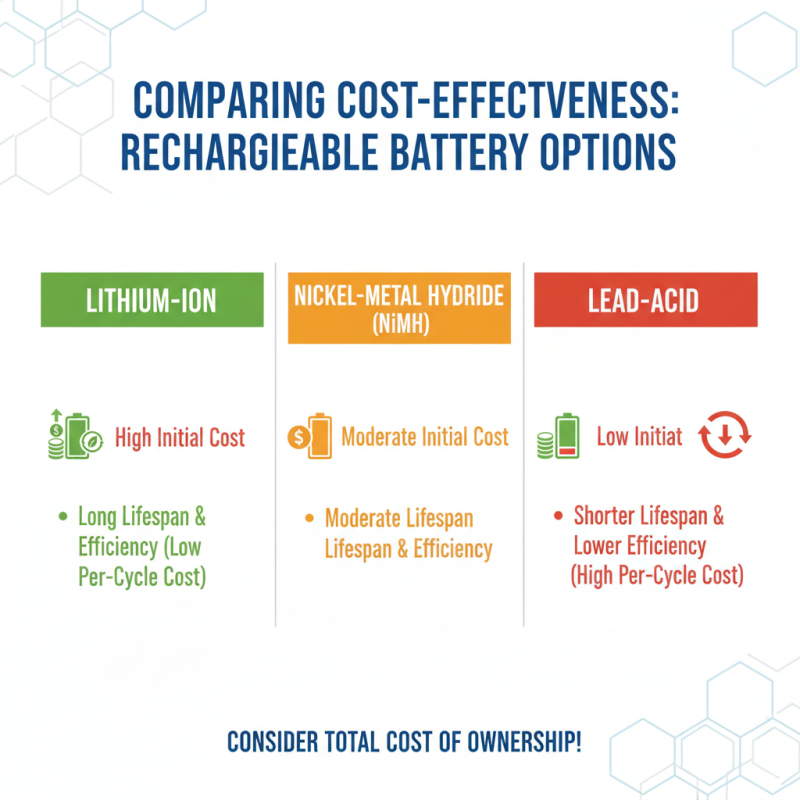
When selecting rechargeable batteries, cost-effectiveness is paramount. Various options exist, such as lithium-ion, nickel-metal hydride, and lead-acid. Each type presents distinct advantages and disadvantages.
Lithium-ion batteries are popular due to their efficiency and longevity. They have a high energy density. However, they can be more expensive than other types. Nickel-metal hydride batteries are often seen as a budget-friendly option. They offer decent performance but may lack the lifespan of lithium-ion counterparts.
Lead-acid batteries are the least expensive initially. They are used for applications like backup power or in vehicles. However, they can be heavy and have a shorter cycle life. It's essential to assess your needs thoroughly. Think about usage frequency and the life span of the battery. Each choice carries trade-offs that deserve reflection. Balancing cost with effectiveness is a crucial decision for optimal results.
Exploring Safety Features and Certifications for Battery Selection
When selecting a rechargeable battery, safety features should be a top priority. Look for certifications such as UL (Underwriters Laboratories) or IEC (International Electrotechnical Commission). These certifications ensure the battery meets safety standards. In 2022, a report by the Battery Safety Council indicated that batteries with these safety features reduced fire incidents by 40%. It's a stark reminder of the importance of choosing wisely.
Tip: Always check for built-in safety mechanisms like overcharge protection. This feature helps prevent overheating, a common issue with batteries. Also consider battery management systems (BMS), which monitor the battery's health. A well-designed BMS can enhance battery life by 30%, based on findings from the Battery Research Institute.
Awareness of potential hazards is crucial. Not all rechargeable batteries are created equal. Some may lack essential safety certifications. This can lead to risks that are often overlooked. Understand the specifications you need. A lack of information can create complacency. Don't assume that all batteries are safe just because they're rechargeable. Prioritize knowledge and research to ensure safety in your selection.
Best Tips for Choosing a Rechargeable Battery for Your Needs
| Battery Type |
Capacity (mAh) |
Voltage (V) |
Safety Features |
Certifications |
| Lithium-Ion |
3000 |
3.7 |
Overcharge Protection, Short Circuit Protection |
UL, CE, RoHS |
| Nickel-Metal Hydride (NiMH) |
2000 |
1.2 |
Thermal Protection, Smart Charge |
CSA, TUV |
| Lead-Acid |
1500 |
12 |
Overvoltage Protection, Valve Regulated |
ISO, DOT |
| Lithium Polymer |
2500 |
3.7 |
Fire Proof, PTC Protective Circuits |
UN, IEC |
Tips for Maintaining and Extending the Life of Your Rechargeable Batteries
Rechargeable batteries are essential for modern devices. To maintain their efficiency, attention to their care is crucial. Research shows that proper usage and storage can extend battery life significantly. Keeping batteries cool and dry can preserve their lifespan. High temperatures can decrease capacity by up to 20%.
Regular charging habits also matter. Allowing batteries to discharge completely can harm them. Aim to recharge them when they reach 20%. This habit not only protects their health but also ensures consistent performance over time. Moreover, periodic usage of rechargeable batteries can help maintain their energy levels.
Investing in a quality charger is vital. Poor chargers can increase the risk of damage. They may also lead to lower capacity retention over time. Always use chargers that match the battery specifications. Monitoring these factors can lead to a reliable Home Battery storage solution. Engaging in good practices makes a noticeable difference. Taking these steps promotes longevity and efficiency, offering sustainable power sources for daily needs.
FAQS
: Evaluate capacity, discharge rate, and cycle life based on your specific needs.
Higher capacity (mAh) means longer usage times, but it can increase weight and cost.
It impacts how quickly a battery releases power, crucial for high-demand devices.
Cycle life refers to how many charge and discharge cycles a battery can handle before performance drops.
They may save money initially but often lead to more frequent replacements.
Common types include lithium-ion, nickel-metal hydride, and lead-acid, each with pros and cons.
They offer high energy density and efficiency, though they can be more expensive.
Assess using frequency and battery longevity; each option has trade-offs that need reflection.
They are heavier and have shorter cycle lives compared to other types.
Yes, investing in quality often results in better long-term performance and savings.
Conclusion
When selecting a rechargeable battery, it is essential to understand the various types available and key factors that influence your choice. Considerations such as capacity, voltage ratings, and the specific requirements of your devices are crucial for ensuring compatibility and optimal performance. Additionally, evaluating battery life and charging cycles can help you choose a rechargeable battery that offers longevity for your needs.
Cost-effectiveness is another critical aspect, as different battery options might vary widely in price. Don't overlook the importance of safety features and certifications, which play a significant role in battery selection. To maximize the lifespan of your rechargeable batteries, implement proper maintenance tips that keep them functioning efficiently over time, ensuring reliable power for your devices.
 8801811173031

 Contact Phone
 Contact Email